

Catalog · How the catalog works
programmer-eeprom-lpt1

EEPROM Programmer by port LPT1.
- ★ 3 on GitHub
Anyone may press Interesting, signed in or not. It helps others find this project.
README
SPI-Flash GUI: Low-Level Automation & Firmware Recovery Tool
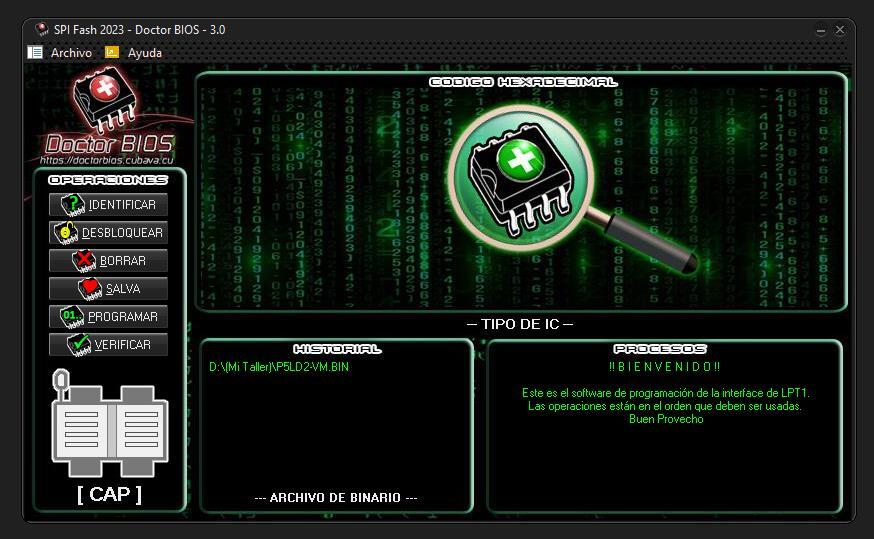
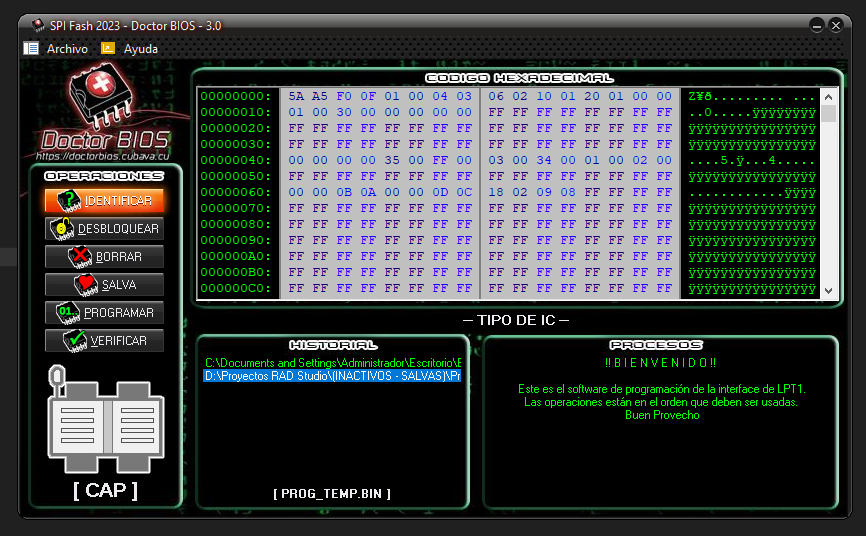
SPI-Flash GUI is a specialized control interface developed in Delphi to automate the reprogramming of SPI 25xxx series memories. Originally created during my Pre-Engineer stage, this tool serves as a Graphical Wrapper (GUI) for low-level CLI engines (such as Rayer SPIPGM), providing a professional and error-free environment for firmware diagnostics and hardware recovery.
🚀 Key Features
- CLI Automation (Wrapper Architecture): Seamlessly orchestrates command-line tools by abstracting complex syntax into an intuitive graphical interface.
- Bidirectional Communication: Handles process execution and shell parameters to interact with the hardware interface via the LPT1 (Parallel Port).
- Operational Efficiency: Eliminates manual command entry, significantly reducing human error and optimizing the workflow for electronic technicians.
- Legacy Interoperability: Designed to maintain high performance on legacy systems (Windows XP) while managing low-level bitstream communication.
🛠️ Hardware & Software Integration
This project was born out of technical necessity in a resource-limited environment, demonstrating Engineering Resourcefulness:
- Software: Developed using Borland Delphi v7.0 Enterprise Edition, leveraging native Win32 performance for hardware-timed operations.
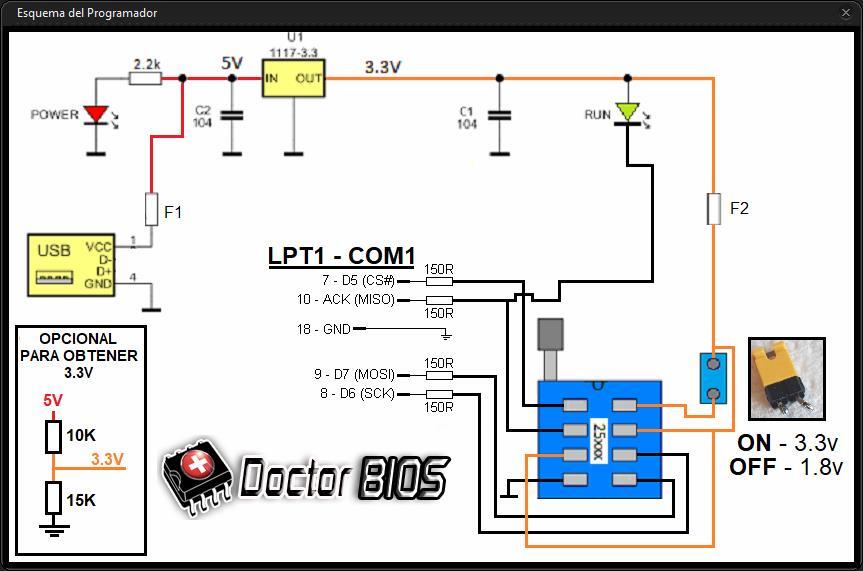
- Hardware Interface: Engineered to work with custom electrical schematics for LPT1-to-SPI communication, ensuring signal integrity during the flashing process.
- Target Hardware: Specialized in SPI 25xxx series (BIOS/UEFI chips), common in motherboards, laptops, and video cards.
🛡️ Technical Achievements
- Process Orchestration: Implementation of a "Black Box" execution engine that monitors console output and translates it into real-time user feedback.
- System Abstraction: High-level management of low-level parameters, allowing technicians to focus on diagnostics rather than command-line syntax.
- Legacy Preservation: Actively maintained via VMware environments to ensure the tool remains functional for servicing legacy hardware that requires physical LPT1 access.
🧠 Engineering Context
This project represents my early transition into Systems Engineering. It demonstrates the ability to identify a bottleneck in hardware servicing and engineer a software solution that bridges the gap between complex low-level protocols and user-centric professional tools.
[!IMPORTANT]
:magnet: Dependencies:
- ATViewer 3.1.0
- VCLSkin
- DevExpress Latino
- Alpha Skin 8.41
- Hexeditd
Community Impact: This tool was widely utilized by the electronic technician community in my home country, providing a viable, cost-effective alternative to expensive imported hardware programmers.
Screenshoot
<table align="center">
<tbody>
<tr>
<td> </td>
<td>
 </td>
<td>
 </td>
<td>
 </td>
</tr>
</tbody>
</table>