

Catalog · How the catalog works
Posit-92

Not retro for nostalgia. Retro for power
- ★ 4 on GitHub
Anyone may press Interesting, signed in or not. It helps others find this project.
README
 Posit-92
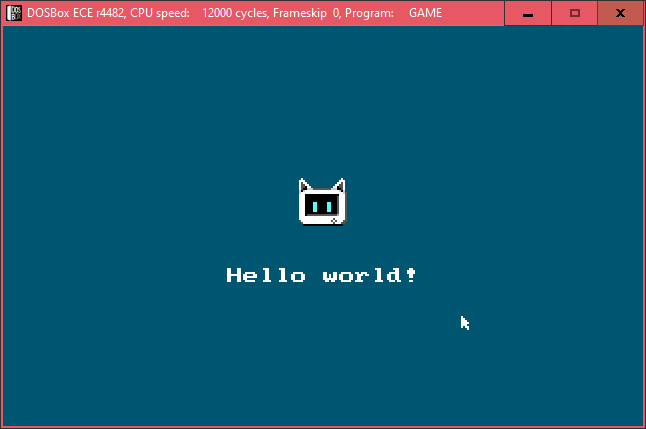
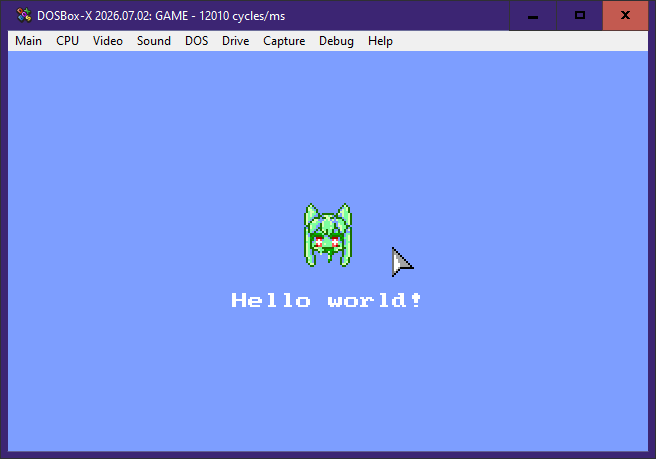
"Not retro for nostalgia. Retro for power."
A handcrafted game framework for Turbo Pascal 7.0. Inspired by the raw speed, minimalism and creativity of pre-2000 tools.
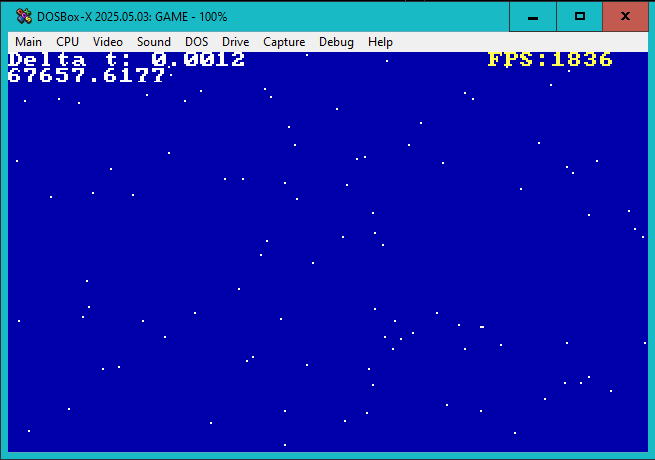
Rainfall demo (YouTube):
Games that I've made are available on my itch.io page:
Requirements
- Turbo Pascal 7.0
- DOS or a DOS emulator such as DOSBox-X
- Perl (at least v5.38.2) for the dev helper scripts
- Optional: Lazarus IDE with FPC configured with the msdos-i8086 target
Getting started
Make a shallow clone of this project, basically without all the commit history:
git clone --depth 1 https://github.com/Hevanafa/Posit-92.gitCreating a new DOS project
Refer to this documentation: docs/new_dos_project.md
Building
Refer to this documentation: docs/building.md
Configuring custom directives
In case you want to make use of the AdLib or immediate GUI, which aren't included during compile process by default, you can use any combination of these directives:
P92_ADLIBP92_IMGUIP92_MODE_X
These custom directives can be enabled in Options menu > Compiler
And then fill in the Conditio(n)al defines with any of the built-in directives listed above
For example, if you want to enable both AdLib and immediate GUI for your game:
P92_ADLIB;P92_IMGUIAfter adding a new directive, always rebuild all the TPU files from the Compile menu > Build, or Alt+C then B
If you want to make the conditional defines persist, press Options menu > Save, or shorter: Alt+O then S
Recommended emulator settings
For general use, change the cycles to 12010, which is the speed of a 486DX CPU
For test projects, set the cycles to 20000
As for the memory size, make it at least 4 MB
Project structure
DEMOS- Example Posit-92 programmesUNITS- Posit-92 engine unitsTESTS- Test programmes
Credits and Inspirations
The name comes from Positron and 1992 (the year in which TP7 was released), combined to resemble an isotope like Uranium-235 because it sounds cool :D
My goal is to create a framework that resembles a fantasy computer, that is similar in spirit to PICO-8 and TIC-80, but built around TP7. Why? I believe it's fast enough & easier than C, added with inline assembly, it's even closer to metal
I'm also inspired by:
- LoveDOS (also, the working fork with the audio working: https://github.com/SuperIlu/lovedos)) and
- TempleOS